The Eponaquest Apprenticeship Program with Linda Kohanov:
Stepping Into the Future with Flexibility to Meet New Challenges and Changing Needs

When Linda Kohanov founded Epona Equestrian Services in the late-1990s, she had no idea that her interest in employing horses as teachers in the work of human development would lead to five books, a practice serving thousands of clients, and an international organization now known as Eponaquest Worldwide. As of 2025, over 400 Eponaquest Instructors on five continents have graduated from the Eponaquest Apprenticeship Program, one of the most innovative, in-depth facilitator trainings in the fields of Equine-Facilitated Learning, Equine-Facilitated Leadership Training, and Equine-Facilitated Psychotherapy.
In recent years, more students have entered the program with a primary interest in leadership training and, more specifically, the Master Herder training, using it in their business lives, as well as in corporate coaching. At the same time, therapists and social workers have embraced the same model in helping people make sense of family dynamics, and in facing the challenges of those working in the nonprofit sphere. Linda has made updates accordingly. The Eponaquest Apprenticeship now offers 2 weeklong sessions of training with graduation as a Master Herder Instructor, with an option to complete an additional week of instruction to become an Eponaquest Instructor.
“We have also created a Master Herder Associate Instructor designation that has been quite successful,” Linda says. “This is for executive coaches, educators and therapists with little or no previous horse experience who want to teach the model in indoor contexts, (including private sessions, coaching calls and larger group presentations) with the understanding that they can be co-facilitators in horse activities when they pair with an experienced equestrian who has also gone through the program.
A Multi-Faceted Practice
The Eponaquest Apprenticeship Program teaches how to use the tools, horse-facilitated activities, lecture materials, Power of the Herd Guiding Principles and the Master Herder model in many different settings. “This helps graduates develop a flexible practice that really keeps things interesting,” Linda emphasizes. “It allows you to take advantage of unexpected opportunities in your community, and it helps your clients to learn how to take horse wisdom back to the human world.
“With this in mind, the apprenticeship offers formats, PowerPoint presentations, professionally produced online courses and human-to-human experiential activities for doing indoor seminars and consultations. This allows you to reach out to organizations that are either still a bit skeptical of the horse-facilitated work or don’t currently have the budget for it. On-site trainings in businesses, schools, non-profits, community organizations, churches, and social service agencies expand your client base—and keep your horses from having to carry the full teaching load.”
Linda also emphasizes how to develop long-term associations with clients through weekly horse-facilitated sessions, advanced workshops, and/or phone consultations that support clients in mastering the 12 Power of the Herd Guiding Principles and The Five Roles of a Master Herder after they leave the barn.
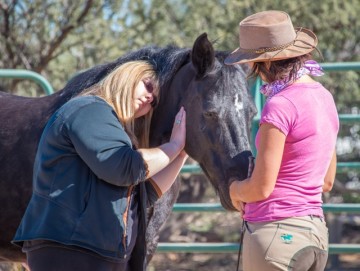
“I am a clinical social worker with a specialty in relationship and professional development counseling,” says Sarah Janosik, who graduated in 2005 and returned in 2014 to become an Advanced Instructor. “This approach to equine-facilitated learning is a unique and powerful process. I have used this method to teach people effective skills in relationships, either personal or business, through working with horses. I love this work and continue to learn new skills that help my clients change.
“Linda has the ability to integrate science, history, psychology, spirituality, and business theory and provide the practical knowledge that people need to make changes. In this process, the horses are teachers, not props or a team exercise. This work is as transformative for individuals in personal relationships as it is for leaders in organizations and professional practices.
“Eponaquest is sophisticated and research-oriented as well as practical. Regardless of whether I am working with individuals or business teams, conservative or liberal individuals, this approach works. It provides the information people need to understand why developing new skills is necessary in this changing world—and practical ways to learn them.” No other equine-facilitated learning program offers so many tools, skills, and presentation materials for helping clients to take “horse wisdom” back to the human world.
“I have found that the addition of the Power of the Herd program to my Eponaquest body of knowledge has not only enhanced my work as an equine facilitated coach but also my work as a life coach, executive coach and organizational consultant, where often it is not possible to interact with horses in order to teach the concepts,” says Juli Lynch, Ph.D., an organization development specialist, author, and Eponaquest Advanced Instructor.
“In particular, I’ve taken these concepts, materials, and activities into my work as an organizational and management consultant in the banking industry. The response has been extremely positive. POH concepts have assisted board members, executives, managers, and frontline staff to learn to thrive in the highly regulated and competitive world of banking where small, family-owned community banks are literally running for their lives as the predatory big banks trounce on them in an effort to acquire and consolidate the industry. By assisting these organizations in building their cultures around the POH 12 Guiding Principles, concepts such as developing assertiveness, engaging creatively, addressing conflict, and using emotion as a tool for awareness before action, my clients and I have seen positive culture shifts and bottom-line improvements that stand as testimony alone to the power of the Power of the Herd.”
A Flexible, Integrative Program
Three sessions spread out over several months allow students time to practice and integrate new material in between each eight-day seminar. There is some flexibility to the program. Apprentices graduate at the end of the second session as Master Herder/POH Instructors who are also certified to offer these tools in educational, personal development, and corporate contexts. Some graduates are satisfied with this level of training and may or may not decide to attend the optional third week that year (or join the third week at a later date).
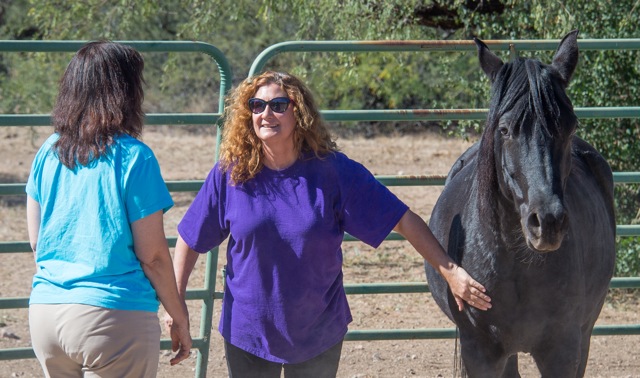
During Week Three, new graduates learn additional horse activities that build on the core Eponaquest tools, including how to teach horse rescue volunteers and other equestrians innovative strategies for working safely with “problem horses.” They become certified in the Sentient Communication® model and are recognized as full Eponaquest Instructors upon completion of this training. Other advanced facilitation techniques include expressive arts, music, transformational storytelling, and intuition/creativity-building experiences. Instructors practice Linda’s unique process for leading guided visualizations such as “Becoming the Horse” and “Harnessing the Invisible” to help clients develop an effective balance between a logical, practical, grounded form of consciousness and an intuitive, imaginative, innovative form of consciousness that inspires leaps in understanding, integration, and transformation.
“One of the things I value most about the Eponaquest Apprenticeship is Linda’s innovative approach to addressing mental health and residual trauma issues by embracing a comprehensive balance of science, arts, and spirituality through the way of the horse,” says Susan Crimmins, Ph.D., a trauma specialist and retired professor of criminology and social work who has created an integrative therapeutic practice.
“What sets Eponaquest light-years apart from other equine programs is Linda’s ability to ground her teachings within historical contexts and well researched scientific frameworks that come alive through interactive experiences, while, first and foremost, honoring the professorial gifts of the horse. In a substantive and savvy curriculum, apprentices are exposed to multi-layered principles and practices, which include the tenets of social and emotional intelligence, as well as how to model and to integrate these skills in the world at large.
“This apprenticeship program doesn’t just teach horse skills; it teaches life skills to be brought forward in healing horses and humanity—a remarkable gift.”
The Latest Innovation: Associate Instructor Status
In recent years, Linda’s work has been embraced by social service agencies and corporate leadership training settings that want to teach these tools and principles to a larger staff base, often without the horse-facilitated component. The University of Alberta received a large Canadian government grant to teach these skills to nearly 100 managers of long-term care homes (called nursing homes in the US) through a combination of online courses, Zoom coaching calls, and larger indoor trainings. The Atlanta-based social service agency Highland Rivers Behavioral Health, and the Tucson-based Primavera Foundation (serving the homeless) have also employed this model to teach the leadership, and emotional and social intelligence skills Linda has developed with agency-wide trainings long term. As a result, they wanted to send staff members to learn how to teach the principles and tools in office settings. For this reason, Linda developed the Master Herder Associate Instructor status. Associate Instructors are educators, therapists, corporate coaches and personal development coaches who have little or no horse experience.
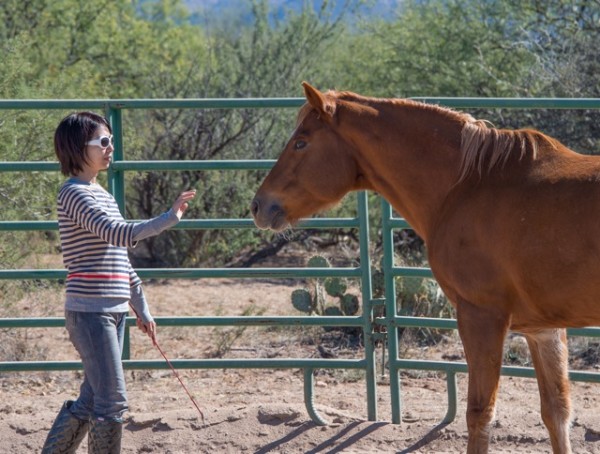
“They go through the apprenticeship program here at the ranch with horse-facilitated experiences as a part of their training,” Linda says. “But they are primarily interested in teaching and coaching indoors and online. They do practice facilitating the accompanying equine experiences under the direction of full instructors who can oversee safe interactions with horses specially trained for this work. With a network of over 400 Eponaquest and Master Herder trainers worldwide, these Associate Instructors sometimes bring executive teams and coaching clients to operations owned and managed by full instructors. It’s been a surprisingly successful model. Some businesses are simply not easily sold on the horse-facilitated work, but they love the Master Herder model and the other emotional and social intelligence skills we teach. We’ve developed ways to present these tools on site and provide supportive coaching with organizations that are not willing or able to afford adding the horse component. Over time, some of these businesses do invest in sending certain teams out to the horses, but other organizations are quite happy with learning the skills in more conventional classroom and coaching settings. When they teach these skills to their entire staff, you essentially have hundreds of people with the same vocabulary and understanding of interpersonal and group dynamics that can be more effectively managed with these unique tools.”
Advancing Horse-Related Skills
The Master Herder model in particular offers a potent, deceptively simple way to understand—and transform—group behavior. This model is also useful for equestrians. From amateur riders to professional trainers to horse rescue personnel, horse-enthusiasts have benefitted from understanding this model and the accompanying experiential techniques, as have people who work in the equine-facilitated human development, therapy, and leadership training fields. A number of Eponaquest Instructors work specifically with equestrians who want to improve their relationships with the horses they ride and train.
An In-Depth History
In 1997, Epona Equestrian Services was established as a mutually supportive referral service of riding instructors, trainers, bodyworkers, educators and counselors who were interested in the healing potential of the horse-human bond. Of the seven original members of this Tucson-based organization, Linda was the only one who specialized in researching and developing what are now commonly called “emotional fitness” and “social intelligence” skills.
“My initial goal was to help horses and riders lead more peaceful and fulfilling lives,” she says. “I also wanted to encourage people who weren’t interested in competitive forms of horsemanship to explore the many benefits of working with these soulful animals for the sheer joy, connection, and personal development benefits I was experiencing through my own close relationships with horses.
“In boarding, apprenticing and later teaching at a variety of training operations, breeding farms and public stables in the mid-1990s, I could see that it wasn’t enough for both species to become more physically and mentally balanced. Time and time again, I would watch horses clearly acting out emotions their handlers refused to acknowledge—and these highly sensitive, intensely honest creatures were getting punished for it. Even interpersonal difficulties between the humans at the barn led to stress for the horses. Yet as I slowly became more successful at teaching nonaggressive leadership, mutually respectful relationship and conflict resolution skills, something even more amazing happened to my students. Their lives at home and work improved as well. And I began to envision creating programs for non-equestrians to benefit from learning these same skills in safe, non-riding activities.”
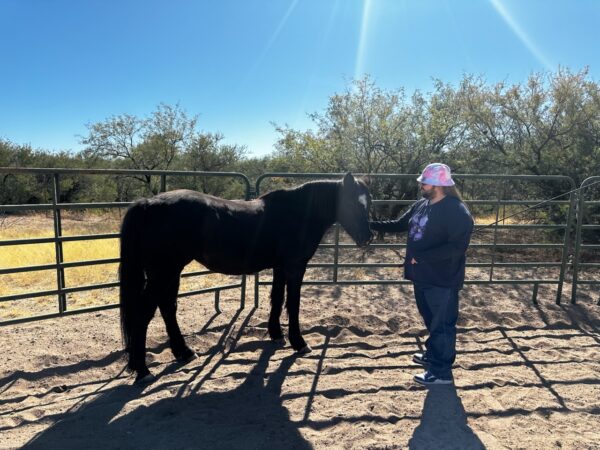
It was an exciting time. Still, the pieces needed to explain what people could learn from horses weren’t readily accessible in the late-1990s. “Daniel Goleman’s groundbreaking book Emotional Intelligence had just been published in 1996,” Linda says. “But it would take him another nine years to release his influential discussion of Social Intelligence: The Revolutionary New Science of Human Relationships, which offered scientific confirmation that emotions are contagious. To add to the confusion, there was no widely accepted term for horse-related programs that proposed to teach personal and professional development skills in non-therapeutic settings—modalities now proliferating under the umbrella of Equine-Facilitated Learning (EFL). Back then, Equine-Facilitated Psychotherapy was just emerging from the field of Therapeutic Riding. PATH was still known as the North American Riding for the Handicapped Association; organizations like EAGALA hadn’t yet emerged, and mainstream equestrians were only beginning to accept the idea that horses were sentient beings with a dignity and wisdom all their own.
“So, you can imagine how hard it was to explain to people that while I was intrigued and most certainly inspired by the potential of equine-facilitated therapy, I was most interested in partnering with horses to help so-called ‘well-adjusted’ people learn to how to excel in life and work.”
Since then, Linda has become an internationally recognized leader in the very field she once struggled to categorize and describe. Her bestselling books combine multi-disciplinary research with personal experience, interviews with other innovators, and client anecdotes showing how horses act as agents of transformation. Through poignant, at times deeply moving stories mixed with the latest insights from experts in a host of related disciplines, she communicates the history, science, and effectiveness of this work. In the process, Linda describes the unique processes she and her associates created for teaching life and career-enhancing skills through working with horses.
The Eponaquest Apprenticeship Program covers the equine-facilitated learning and therapeutic techniques her organization developed over the last 18 years, as well as the most recent Power of the Herd (POH) and Master Herder skills that have been successfully employed in corporate, non-profit, educational, counseling, parenting, equestrian, religious/spiritual, social activism, and personal development contexts worldwide.
Students practice how to partner with horses to work with adults, teens and children, with individuals and groups. Apprentices receive various tools and workshop formats for educational, leadership, equestrian, and personal development contexts, as well as mental health/psychotherapeutic settings. (Linda strongly believes that facilitators should employ different approaches for personal development, leadership, and therapeutic clients. See pages 414 to 418 in The Power of the Herd for her discussion of this topic.)
The Power of the Herd
Linda’s books The Tao of Equus (2001), Riding between the Worlds (2003), and Way of the Horse: Equine Archetypes for Self Discovery (2007) have been translated into French, German, Dutch, and most recently the Czech language. The Power of the Herd (2013) and The Five Roles of a Master Herder (2016) have been released in multiple languages. These books have achieved notoriety as textbooks in universities, therapeutic practices, and corporate leadership programs. They’re even used in continuing education seminars for other facilitator trainings unrelated to Eponaquest (including EAGALA and PATH-based programs as well as several equine-facilitated coaching programs). However, only those facilitators who study directly with Linda Kohanov and graduate from post-2012 Eponaquest and Master Herder Apprenticeship Programs (or the Power of the Herd Continuing Education seminars for previous Eponaquest graduates) carry an official endorsement from the creator of this innovative model and are featured as Recommended Instructors with the “POH” and/or “Master Herder” designations on the Eponaquest Worldwide website.
“While I’m pleased to see that so many people have embraced The Power of the Herd and are incorporating the 12 Guiding Principles into their own practices,” Linda says, “there are very specific horse-facilitated activities, indoor experiential activities, and phone consultation techniques that go along with the text that I simply could not include in the book. They must be taught in person.”
Linda’s fifth book, The 5 Roles of a Master Herder, took this work to a whole new level. And has been embraced by a larger audience than ever. Actor, director and author William Shatner calls this model “an innovative and practical nature-based approach to leadership — and life. It’s not just for corporate executives. Parents, teachers, community organizers, film directors, and especially politicians would all benefit from learning these skills.”
Leadership Through Relationship
“The Five Roles are based on studies of traditional herding cultures and experiences with my own herd of horses,” Linda reveals. “Pastoral tribes travel vast distances through changing climates. Along the way, they meet up with different cultures, facing both two-and four-legged predators at times. Even so, they manage to keep the herd and the tribe together without fences and very little use of restraints, relying instead on a sophisticated understanding of instinctual group dynamics, mutual aid, and interspecies socialization.
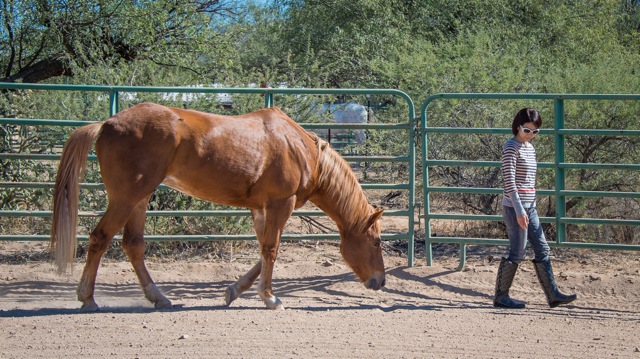
“Experienced herders in these cultures learn to employ five different leadership roles as needed, and I mean that each herder knows when and how to use all five, rather than specialize in one or two. These roles are the Leader, the Dominant, the Sentinel, the Nurturer/Companion, and the Predator. In our sedentary culture, most people—even accomplished equestrians—have lost this knowledge. Few people realize that in herds of freely roaming herbivores, the Leader and the Dominant are often two different animals, that they perform specific functions essential to the group’s wellbeing, and that the other roles I mentioned also contribute to the healthy functioning of a herd.”
“I quickly realized that modern humans would also benefit from understanding when and how to use these five roles interchangeably, fluidly, as needed. I also observed that when humans overemphasized one or two roles (as most people in our culture are inclined to do), each role has a shadow side that results in dysfunctional behavior. We’re well aware, for instance, that people who overemphasize the role of Dominant or the role of Predator can wreak havoc in businesses, in families and most certainly in politics. Your average dictator takes it one step further, combining the roles of Dominant and Predator, enslaving and victimizing people in order to thrive at their expense. But many people don’t realize that these two roles are useful, necessary in fact, when separated and employed sparingly, for very specific purposes, by people who are well versed in nonpredatory forms of power, people who know when and how to employ all five roles for the good of the tribe. For many people, it’s also counterintuitive, yet ultimately enlightening, to realize that even the Nurturer/Companion role can have toxic effects in organizations and families when this function is over-emphasized in an individual.”
The Five Roles of a Master Herder makes sense of previously confusing group dynamics, while helping people to develop a mature, balanced, mutually empowering approach to leadership and social intelligence: at work, school, home, and in larger cultural contexts.
“All kinds of audiences really get excited about this material,” Linda says. “Many have told me that simply hearing a short talk on this model provides an immediate sense of relief, helping them to see that much of the conflict occurring in groups is instinctual, not personal. When combined with horse-facilitated activities that exercise these roles, individuals and organizations become more confident, more compassionate, more thoughtful, empowered and supportive of each other.”
In Paris, Linda was asked to present the Master Herder PowerPoint to a multilingual audience of entrepreneurs and business students at the Executive MBA Program “Leading Innovation in a Digital World” de l’Institut Mines-Telecom. Didier Tranchier, head of this international program, wrote that this two-hour presentation “changed my life and the life of everyone in the conference room that night. Explaining the differences between a dominant and a leader, and the usefulness of predatory power when balanced with nonpredatory power were real insights to understand how companies are working and how we can improve our efficiency. With very simple words and great examples coming from the world of horses and traditional herding cultures, Linda explained the power of groups and how to build relationships that can enable any individual, even a child, to steer and leverage large and powerful organizations.”
Therapists and educators also find the model useful. “Linda has pioneered an innovative approach to understanding human behaviors in groups,” says author, psychologist and family reunification expert Dr. Rebecca Bailey. “Her insights are applicable to a wide variety of populations. By understanding the unconscious, often purely instinctual power plays in human relationships and nature, she is helping people shift old power patterns to be more effective in all their relationships. Corporations, educators, families and individuals will benefit from looking at themselves from this life-altering perspective.”
The book also includes an assessment tool for people to learn which roles they are talented at (and tend to over-emphasize) and which roles they ignore or actively avoid. This assessment helps people understand how they use, or misuse, these various roles in their professional lives as well as in their personal lives. “What we have found in testing this material,” Linda reports, “is that people sometimes overemphasize certain roles at work, while engaging in the habitual, yet still dysfunctional, overuse of other roles with family and friends,” Linda says. “Learning how to balance all five roles at home, school, work, and in larger community settings is key to experiencing greater harmony, effectiveness, and joy in all aspects of your life.”
Members of the Apprenticeship Program receive training in how to use the assessment tool in leadership, personal development, and family systems contexts. They will also learn how to teach the Five Roles to individuals and groups, adults and children.
“One of our graduates, Charlotte Richardson-Zwald, taught a modified version of the Master Herder skills to seventh-graders,” Linda reports, “and the results were impressive. The students were not only receptive to the daily classroom work and monthly trips to the barn, but they were also enraptured with this material. I was so excited to see how this program progressed over several years as the school continued to support the students studying the Eponaquest tools five days a week!”
Horses Are Professors

The nature of this work affords apprentices many opportunities to practice the tools and experience what it is like to work in a mutually supportive, emotionally and socially intelligent community of fellow instructors who truly want to shift the unproductive, overly competitive patterns active in many businesses, schools, and families.
“This apprenticeship changed my life, improving my skills and ability to help both humans and horses,” says Cathryn Clerc, who specializes in equine-facilitated personal development programs as well as transformational approaches to leadership training. “The same skills I teach, I strive to embody in my personal life, and I am fortunate to love what I do for a career.
“I researched several other programs and teachers prior to settling on the 2006 Eponaquest Apprenticeship. Since then, as part of my ongoing mission to improve my facilitation skills, I regularly seek opportunities to learn from others in the equine-facilitated learning field. I am always left with the awareness that the Eponaquest Apprenticeship stands alone in its comprehensive teachings. Linda’s teachings are groundbreaking, and year after year she continues to produce new bodies of work that keep her apprentices at the forefront of this field.
“I am blessed knowing my work makes a difference in the world, and I am excited about continuing to expand my offerings as Linda shares her latest developments through the continuing education programs at Eponaquest.”
Apprenticeship Program Development
The Eponaquest Apprenticeship Program grew directly out of the success of Linda’s first book, now considered a classic. “When The Tao of Equus was published in 2001, the response was overwhelming,” she remembers. “Suddenly, I was meeting kindred spirits from around North America and across both oceans who wanted to study the techniques we’d been developing since the mid-1990s. Back then I was teaching mind-body awareness, nonverbal communication, mutually respectful relationship, and emotional fitness skills to riding students. I was also collaborating with a couple of Tucson-based therapists who saw the potential of this work for use with trauma survivors and other people who had reached blocks in conventional office-based counseling. Interest in The Tao of Equus, however, made it necessary to streamline these skills and teach them in two, three or four-day workshops because our out-of-town clients wanted to have efficient, concentrated, life-changing experiences they could fit into a long weekend.”
It was a tall order. Still, the formats and activities created in the wake of this new demand were an instant success: “Participants not only came back for more, they urged us to start a facilitator-training program so that they could take this model back to their own communities.”
The very first Epona Apprenticeship Program was held in 2003. “I was grateful to have an adventurous co-creator in establishing this program,” Linda says. “Kathleen Barry Ingram, MA, had more of a counseling orientation at that time. Still, we both quickly noticed that the apprentices—the people who came to this program to learn how to help others—also experienced their own profound insights working with the horses. Whether they were licensed therapists, educators, clergy, coaches or equine professionals, their lives were changing, sometimes dramatically, as a result of even attempting to ‘practice what they preached.’ Suddenly I had all kinds of case studies to support the idea that horse-facilitated work wasn’t just for those who needed therapeutic support. These animals had the ability to help accomplished, well-adjusted people reach new levels of success, creativity and satisfaction both personally and professionally.”
Over the years, the program expanded. Linda asked several graduates with different areas of expertise to join the Eponaquest faculty, while also encouraging them to develop their own unique practices. “Shelley Rosenberg was my riding instructor and trainer for many years. She was also one of the founding members of Epona Equestrian Services when it was established as a Tucson-based collective of trainers, educators, and counselors in 1997. I was so excited when she got interested in the EFL/EFP field in 2003, went through the Eponaquest Apprenticeship Program the next year, wrote a book about her own experiences with horses as healers, and subsequently joined the staff. A couple of years later, Kathleen Barry Ingram branched off into her own practice and began to travel extensively, whereupon Mary-Louise Gould, MA, who graduated from the first Eponaquest Apprenticeship, stepped forward as a consummate faculty member and apprentice liaison in her own right. I subsequently asked Mary-Louise and Carol Roush, who also graduated from the first class, to take over the Epona Advanced Study Experience (EASE) that Kathleen and I had created. Psychiatrist Nancy Coyne became a faculty member specializing in Equine-Facilitated Psychotherapy after graduating from the apprenticeship in the mid-2000s. By 2010, Carol, who showed a real gift for applying the Eponaquest tools to personal development, was traveling through Europe, where she started our first bi-lingual apprenticeships in Germany and France.
In between workshops, apprenticeships, and organizational adjustments related to continuing growth of the business, Linda still found time to delve into the history, science, anthropology, and pan-cultural mythology of the horse-human bond. This culminated in her 2013 book The Power of the Herd, which also included 12 Guiding Principles that identify key relationship, leadership, and emotional and social intelligence skills revealed through years of research and development.
“By that time,” Linda says, “our regional collective, Epona Equestrian Services, had become Eponaquest Worldwide, and I welcomed some new Advanced Instructors to join the faculty, including Elysa Ginsberg and Sue Smades, both of whom are well versed in the latest horse-facilitated innovations developed for teaching the skills outlined in my books.”
With The Five Roles of a Master Herder, the Eponaquest Apprenticeship has distinguished itself as one of the most innovative, well-researched, and effective programs not only for teaching skills through direct work with horses, but for helping people take what they learn at the barn directly back into the human world—and allowing populations who aren’t yet ready to go to the barn to benefit from the wisdom and power of the herd, regardless.